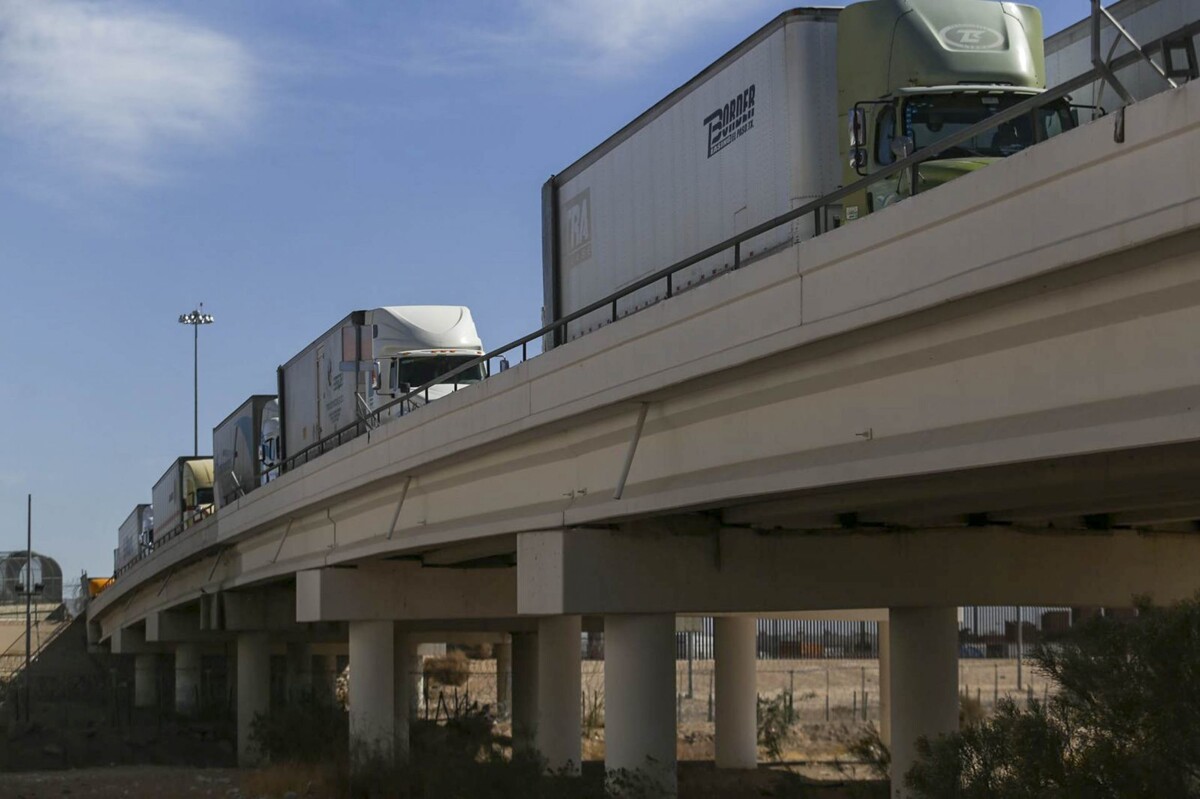
A Mexican business coalition accused the United States of violating a 40-year-old environmental treaty by failing to assess the impact on air quality for Mexican border residents before closing a major commercial crossing, according to a complaint made public on Tuesday. The complaint, filed with the Commission for Environmental Cooperation (CEC), which oversees ecological issues in the United States, Mexico, and Canada, argues that the decision will divert tens of thousands of trucks per year to neighborhoods that already suffer from high levels of pollution. The National Association of Importers and Exporters of the Mexican Republic, Chihuahua Section, filed the complaint under the USMCA trade agreement, alleging that the U.S. violated the 1983 La Paz Agreement, which requires the assessment of significant environmental impacts within 100 km of the border on both sides. The May 2 decision by the U.S. General Services Administration will permanently close commercial operations at the Córdova-Americas bridge, straddling the border of El Paso, Texas, and Ciudad Juárez, Chihuahua, starting in May 2026, redirecting over 40,000 annual truck crossings primarily to Zaragoza-Ysleta, 19 kilometers away. Zaragoza-Ysleta already handles 67% of the region's commercial truck traffic, and the petition alleges that the additional vehicles will significantly increase pollution in the densely populated Mexican neighborhoods south of the crossing. The petitioners claim that the U.S. environmental study did not consider cross-border repercussions, despite the bilateral treaty requiring both countries to assess and mitigate significant environmental effects in the 100 km border zone.